
Indoor kids play area ideas work best when they give kids dedicated space to read, play, create, and unwind. A play space adds a fun, dedicated area without requiring one large playroom. Many of the playroom ideas you see in homes with a dedicated playroom can easily be scaled down to a corner, closet or open wall space in an existing living room or bedroom in your home. Small, intentional zones often fit family life better because they can shift as children grow and routines change. Reading corners, toddler hideouts, play closets, family room storage, and personal spaces for older kids can all feel useful without allowing toys to dominate the entire house. The goal is to create a place with a clear purpose, enough storage, and style that connects to the rest of the home.
Designing Functional Kids Play Spaces
Kids areas need to be functional first, so deciding how you want the space to be used, where it will be placed, and what will be stored there needs to come first. Some homes work well with separate zones for reading, crafts, games, and pretend play, while others need everything contained in one larger room. Our house is naturally divided into smaller areas, so I have separate spaces, but those same categories could easily share.
I prefer to plan for regular furniture like dressers, cube storage shelves, cabinets, and comfortable chairs in kids spaces rather than shorter-lived, brightly colored plastic pieces. These items provide smart storage now and can serve a different purpose later. Because we live in a warmer climate, the kids take most of their physical activity outdoors. In a cooler climate, carving out additional indoor space for climbing, movement, and active play during the colder months is a smart choice.
Color and Style in Younger Kids Play Spaces
When planning the color and style of a kids play area, let your storage needs shape the decorating plan because too many competing toy categories can make even a beautifully styled room feel unsettled. I keep only a few toys or toy categories clearly bins in each area, which makes on going organization and editing easy. For young children, a small selections of toys still offer plenty to use without overwhelming the room. Don’t be afraid to edit your toys down to the size and storage space available to you as you’re planning your layout. Color and style can help connect and coordinate with decor in surrounding areas. I don’t hesitate to add younger, lightly themed wall art or a fun pop of color in a small dose. These accents can be quickly and easily changed out in the future. Choose built-in lighting and durable finishes help keep these kids play area decor ideas in great shape with regular use.
Nursery Corners for Reading
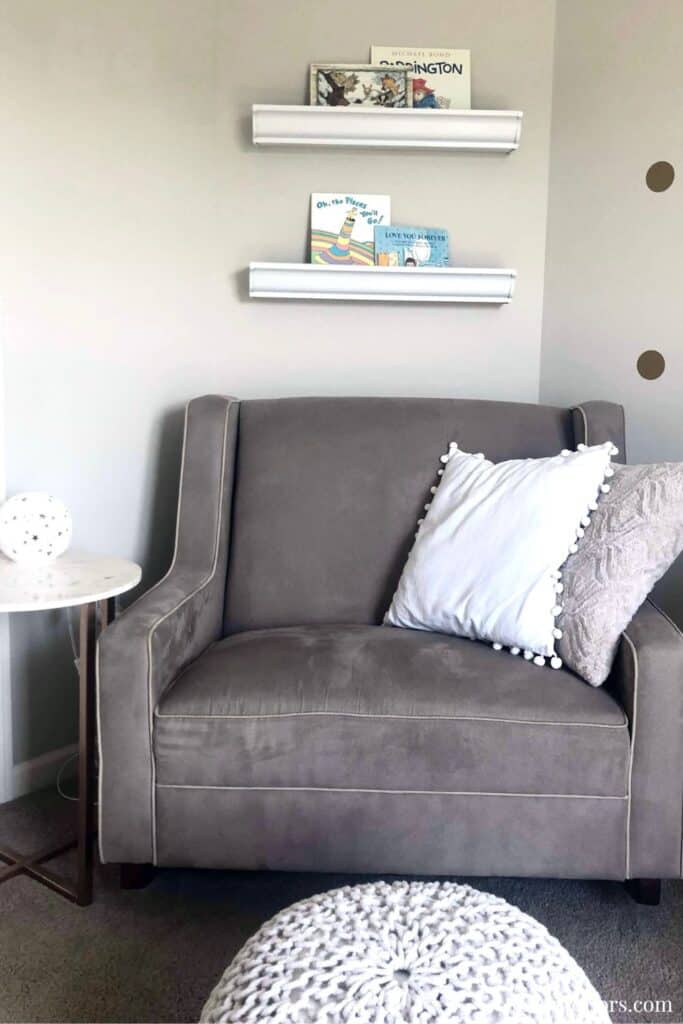
A nursery reading corner is an early version of a kids play area, and comfort matters more than elaborate decorating. A wide rocking chair, footrest, pillows, and a soft throw create a useful place for reading, feeding, quiet play, or settling into the nighttime routine. Easily accessible storage keeps books and a few toys close without requiring trips across the room. I love using a wider chair in nurseries. It’s a great way to extend the life of the corner because a toddler can eventually climb up beside you for a relaxing story.
Toddler Play Areas for Books and Toys
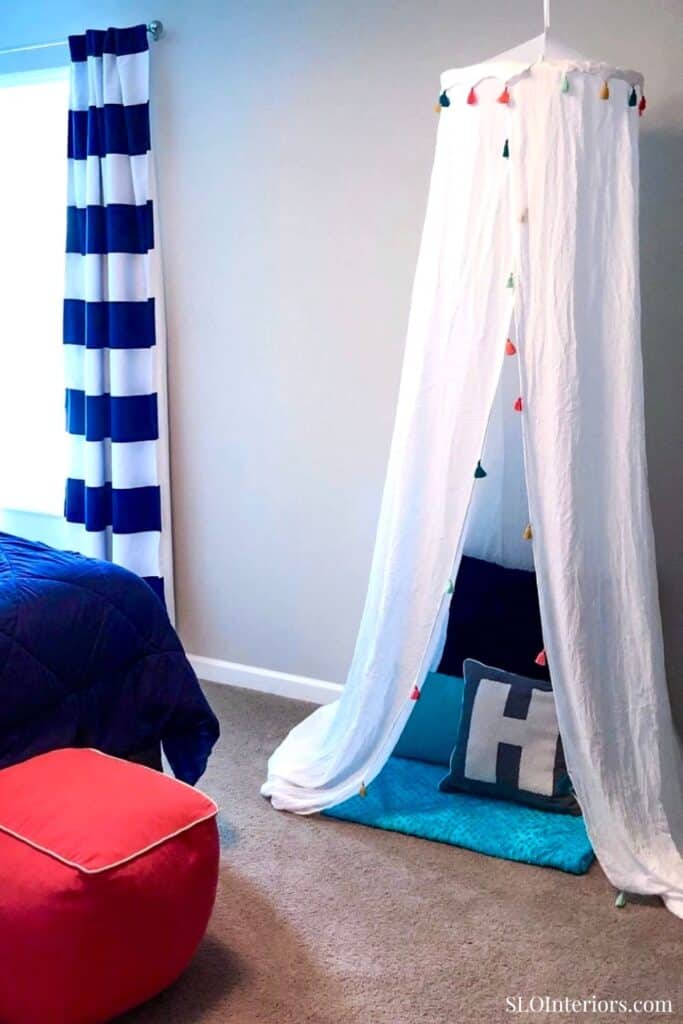
Toddlers need low, easy access to a minimal number of books and toys as they start moving though their rooms alone. A small area with open floor space is often more valuable than additional storage pieces full of choices as young kids need ample room to stack, build, climb, and spread out. I do not rotate toys or store a large amount elsewhere because that creates extra work. Keeping only a few items in toddler rooms ensures enough room for play and makes the room easier for everyone to manage.
A Little Kids Play Closet for Containing Toys
We do not have a dedicated playroom in our house, but I planned for a large walk-in closet next to our bonus room for the kids favorite large toys. They keep a few small items in their bedrooms, while the pieces they use most and that have the most coordinating pieces live close enough to the family room area. The door conceals the space and the limited size keeps the amount of toys we own in check. As the closet becomes crowded, we sort through everything and pass along what the kids no longer use. This is a great idea for storage because it can be scaled down to a traditional closet as well for homes without extra room or playroom to spare.
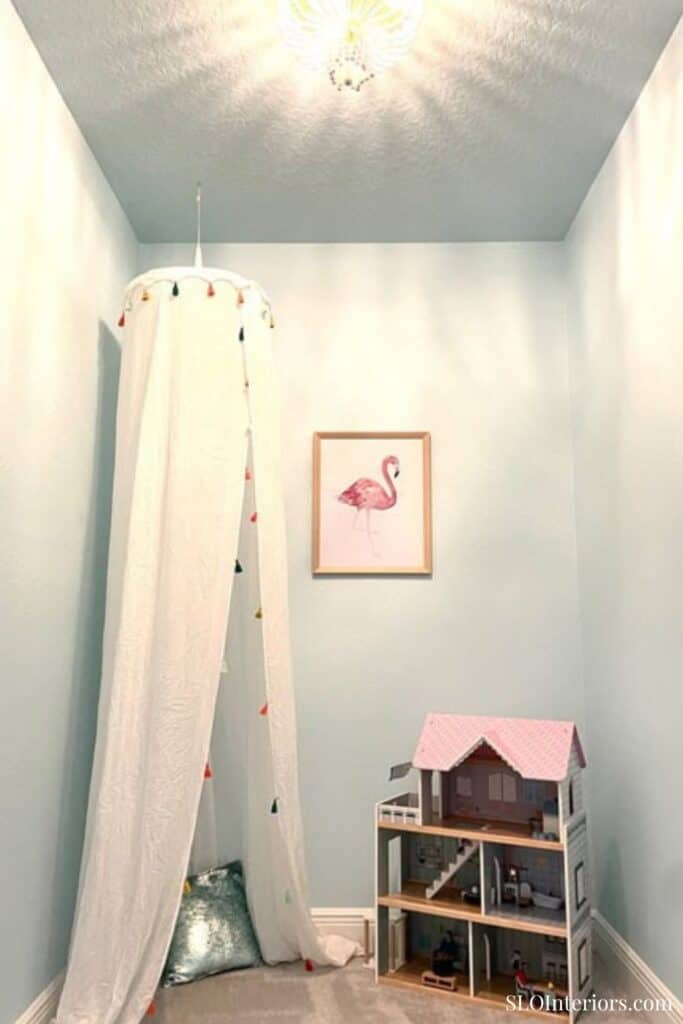
The play closet space itself is simple, but a few playful details make it feel special. I used a basic paint color, painted the ceiling as a fun way to bring in extra character, and added a beaded chandelier and flamingo art in a plastic frame. Cube storage and four bins provide just enough organization to keep our toys organized without the potential for them to overflow. Now that the kids are older, I also hang the growth charts I made in the closet because I no longer worry about the kids pulling them off the wall. It’s become a great place to keep their favorite toys contained while still making them easy to access.
Big Kids Play Spaces in Family Rooms
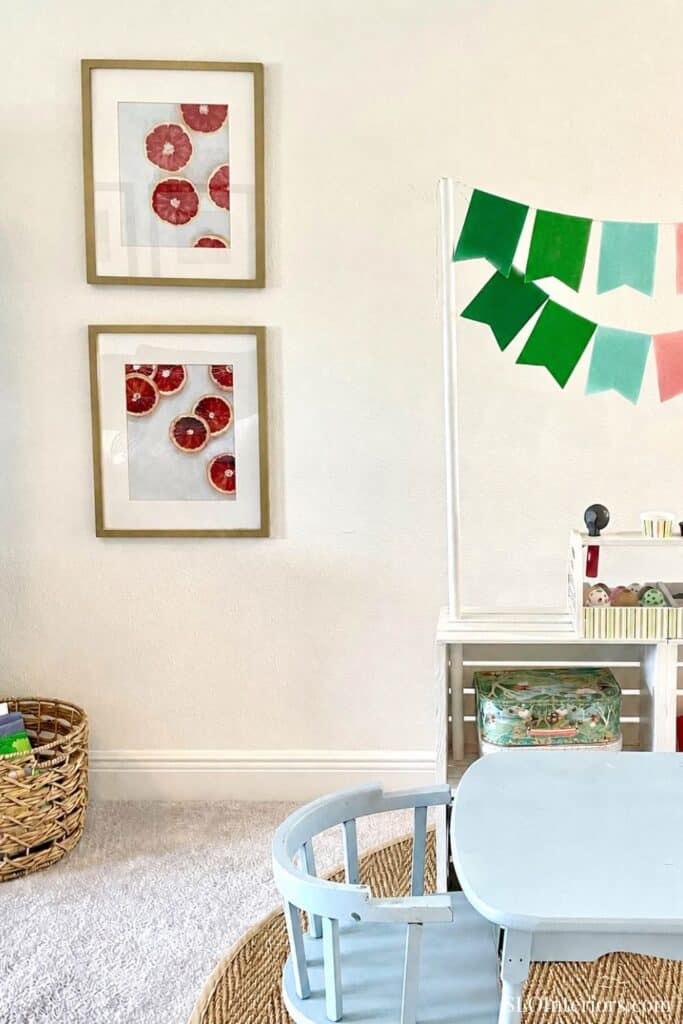
Keeping a small selection of play items in a main living area encourages kids to play nearby while the rest of the family handles other tasks. A great option for a family room play area could include a corner, cabinet, basket near the sofa, or child-sized table that blends with the existing furniture. I used a dark wood dresser that we used to have in our bedroom and repurposed it as toy storage under our TV. It holds board games and craft supplies and makes an easy storage place that bigger kids can use while supporting creative play and still looks great in the shared living space.
Personal Space in Older Kids Rooms
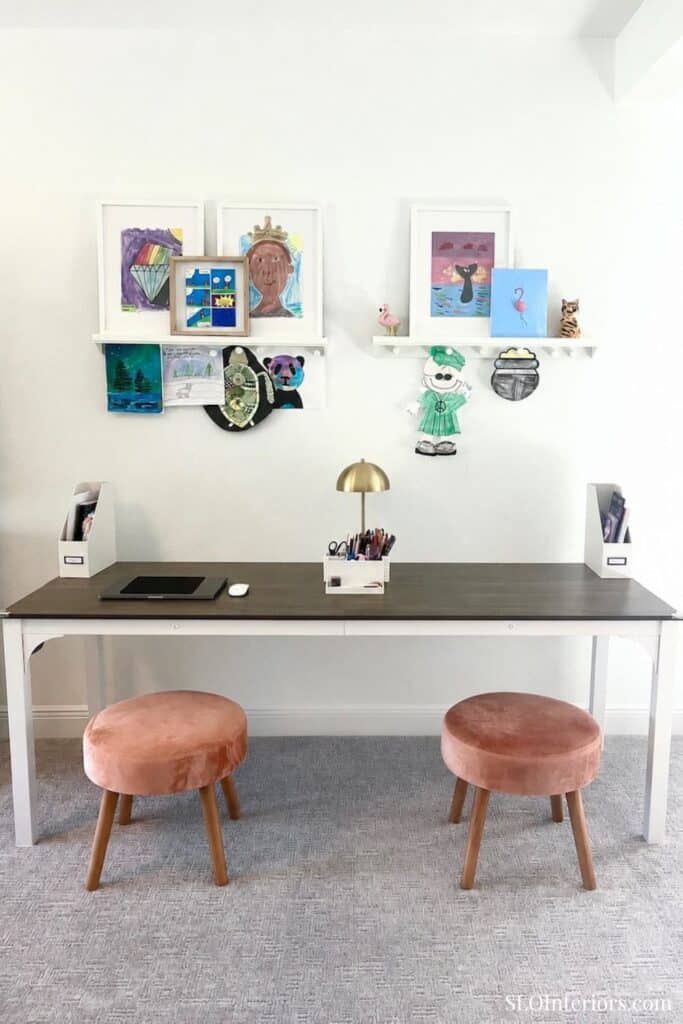
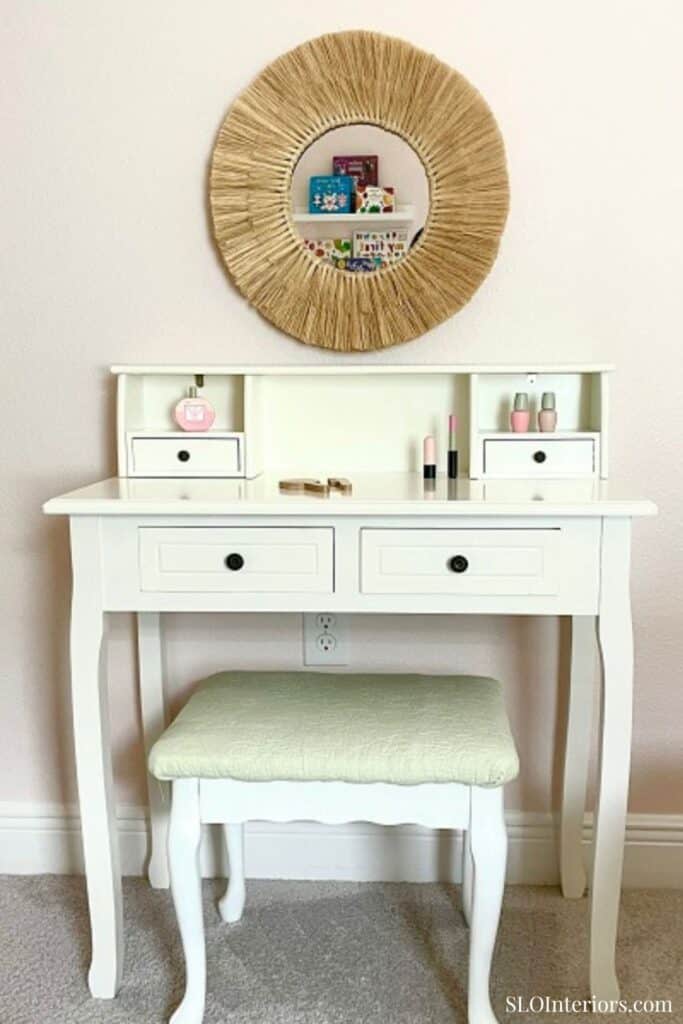
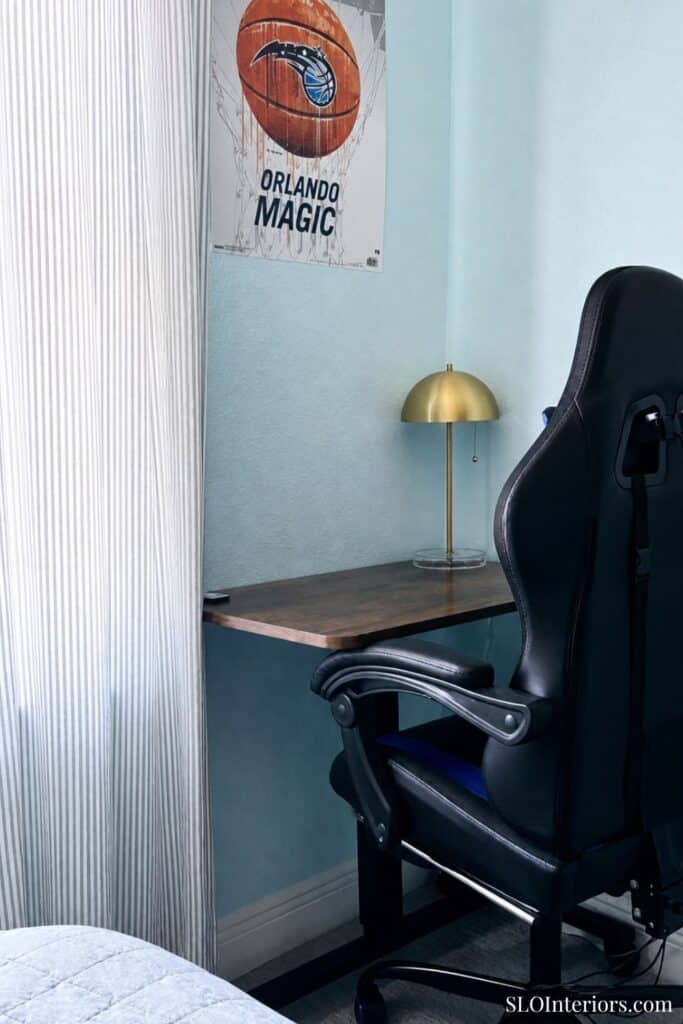
As children from from elementary age to middle schoolers and beyond, they need personal zones for reading, studying, gaming, getting ready, or simply spending time alone. Knowing that preferences change quickly from elementary to middle and beyond, plan these spaces with minimal investment and avoid permanent design choices. A small vintage vanity in my daughter’s room and a compact desk in my son’s room have both created useful areas without requiring a major redesign. We recently replaced his gaming chair with a comfortable accent chair, which helped the space evolve with the way he uses it now. It’s important to me to support the kids interests by carving out spaces that support their hobbies.
Small Space Kids Play Areas
Indoor kids play area ideas are easy to integrate throughout the home when each one supports the stage your children are in. Repurpose a closet, carve out a bedroom corner, or create a dedicated spot in a living area to give a kids playroom useful structure without taking on an entire room makeover. Coordinate the colors with the rest of the house, choose real wood pieces over plastic when possible, and limit storage to what the space can actually hold to keep the result thoughtful and manageable. A little space designed around downtime, hobbies, and independent play gives children room to pursue fun activities and their interests while still feeling like a natural part of the home.