
Spring decorating does not need to be complicated to feel fresh. A thoughtful wreath on the front door can refresh your home decor in a subtle but meaningful way. Many spring wreaths at retailers feel either overly busy or too minimal, which makes it difficult to find the right match for your style. Making your own lets you keep the design simple, balanced, and more personal to your home.
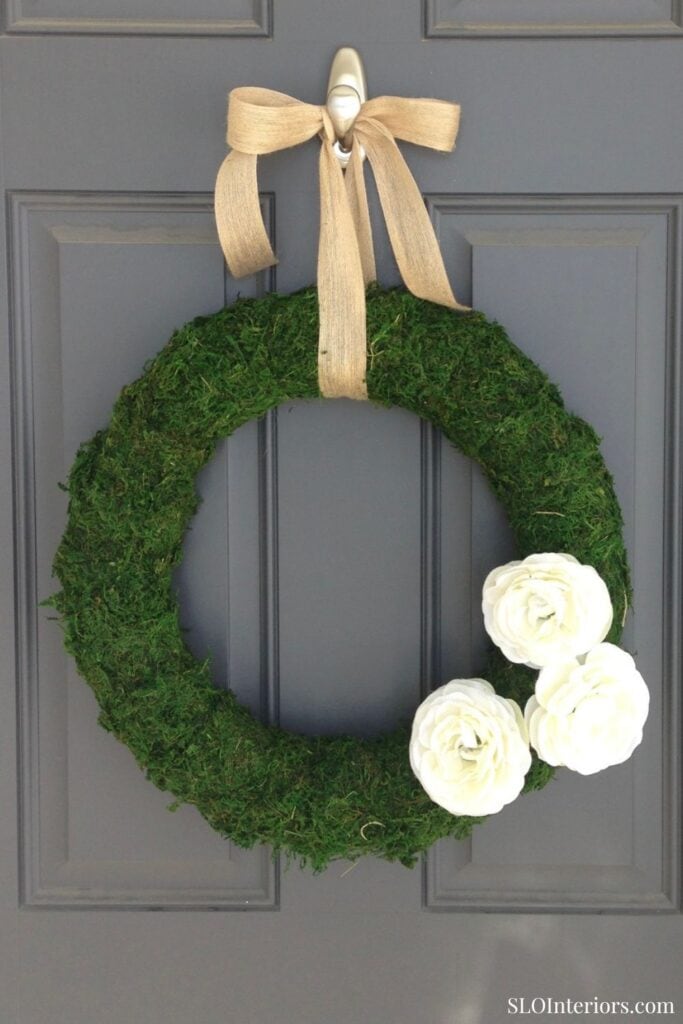
The new season is the perfect time to focus on small, intentional updates that feel manageable. A wreath becomes a natural focal point without overwhelming the rest of your front entry or competing with what you already love. With moss, white flowers, and burlap ribbon, this spring wreath adds texture and softness without feeling cluttered or overdone.
A Simple Wreath for Spring
This project focuses on simplicity without sacrificing style. It comes together in three steps and is easy to assemble, even if you don’t consider yourself crafty. You have full control over the style of wreath you design through thoughtful color and material selection. These choices are what makes the finished result feel cohesive with your home.
Making your own wreath that matches your style saves you from having to purchase a new new wreath each season. Once you create your own, you can use it for years to come without it feeling dated. The result is a seasonal update that feels timeless rather than trendy, which makes it easy to bring out again each spring. A few well chosen elements create a beautiful wreath that feels elevated but still approachable.
What You’ll Need
Materials
The supplies I used for this wreath are very simple.
• Straw wreath base (wrapped in plastic – leave the plastic on)
• Preserved moss ribbon
• Burlap ribbon (1 1/2 inches wide)
• Three faux white flowers
Tools
• Scissors
• Wire cutter
• Hot glue gun and sticks (full size or mini is fine)
Before You Start
Clear enough room on your workspace to wrap the wreath base. The moss ribbon can shed slightly, so keeping the area contained makes cleanup easier. Leaving the plastic wrap on the wreath base helps maintain its shape while you work.
Lay out your flowers and ribbon before attaching anything with hot glue. Take a moment to consider placement of the focal point flowers will helps you avoid crowding the design. The goal is balance, restraint keeps the finished piece feeling intentional.
How to Make a DIY Spring Wreath
Step 1: Wrap the Base
Begin wrapping the moss ribbon around the wreath base while leaving the plastic in place. Secure the end of the ribbon to the base and wrap. Secure the ribbon every few inches with hot glue so it stays smooth and even. Continue until the surface is fully covered. Trim the end of the ribbon neatly and glue it in place on the base.
The moss layer provides depth and texture. It creates a neutral foundation that pairs beautifully with florals. This simple step sets the tone for the entire design.
Step 2: Attach the Flowers
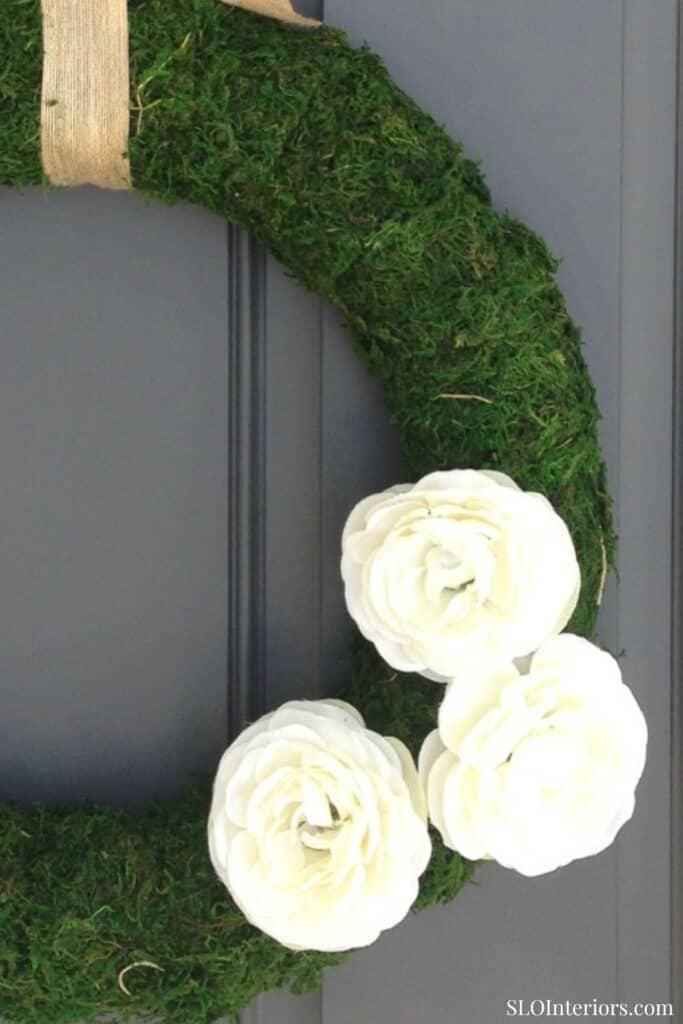
Remove the stems from the faux flowers so they sit flush against the wreath. Arrange them slightly off center to create a relaxed, natural look. Secure each bloom with hot glue and press firmly until set.
Leave enough negative space around the flowers so the moss remains visible. That contrast creates visual interest and keeps the design from feeling crowded. If you prefer a softer look, you could substitute faux leaves instead of flowers or tuck in a few subtle Easter eggs in for a fun seasonal moment.
Step 3: Add the Ribbon
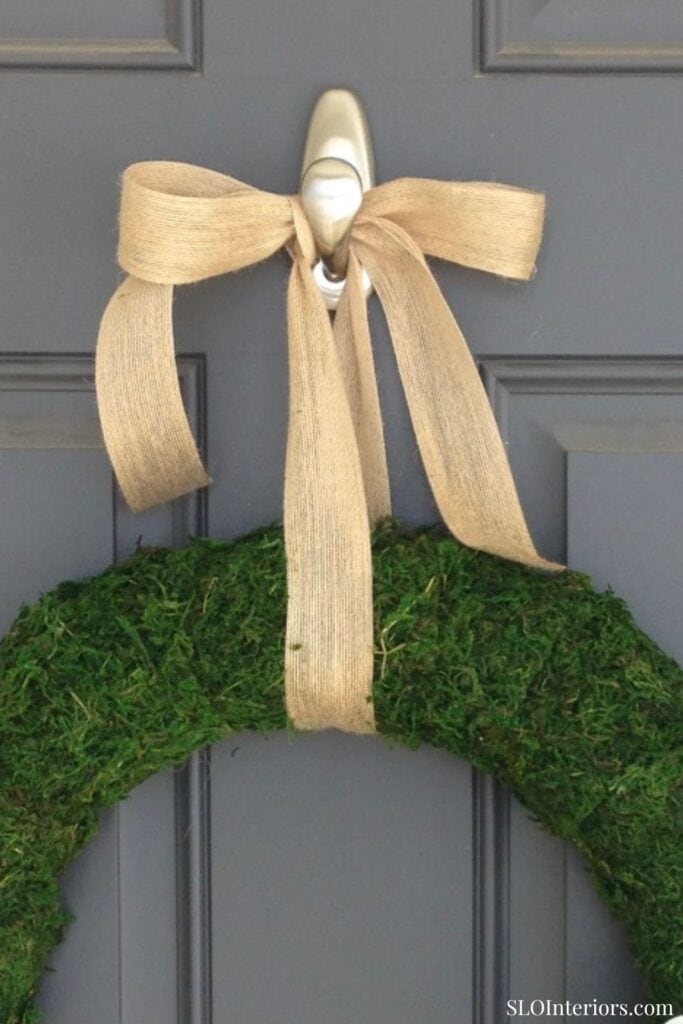
Create a sturdy loop at the top using burlap ribbon. Tie a square knot. This loop will allow the wreath to hang evenly on the front door. Use the remaining ribbon to tie a simple bow that rests neatly at the top.
The burlap ribbon provides functionality to hang the wreath while adding some warmth. It also introduces a subtle bit of color without overpowering the greenery. Adjust the bow slightly once hung so it feels relaxed but intentional.
Styling a Spring Wreath
This wreath is great for the front door to signal the shift into the new season. The green moss and white flowers create a fresh focal point without being overpowering. It works especially well against darker paint colors where texture stands out. The materials will hold up longer when protected from direct sun exposure, some fading is likely to occur in direct sun. If you are looking for simple spring Easter ideas to carry indoors, these simple Easter home decor ideas offer more ways to decorate inside your home.
Tips and Variations
For a slightly different look, wrap the entire wreath base in ribbon instead of moss. A single oversized bloom attached would create a more modern statement. You could also add delicate accents for a playful touch while keeping the overall structure simple.
The key is to leave enough room for each element to breathe. Overfilling the design reduces its impact. Thoughtful spacing keeps the wreath feeling balanced and timeless.
The Finished Spring Wreath
Seasonal updates do not need to be dramatic to feel meaningful. At the right time of year, even a small change can shift the mood of your home. A wreath on the front door is a simple way to create that transition. This design feels fresh, structured, and timeless. Moss adds natural texture, while white flowers brighten the shape. A burlap ribbon introduces warmth and a gentle pop of color without overwhelming the wreath.
Making the wreath yourself also gives you control over the materials and color palette. Instead of settling for what is available in stores, you can create something that fits your home. The finished wreath feels intentional and personal rather than pulled from a display rack. It is also a decoration you can reuse for years, which makes the project both practical and rewarding. Small, thoughtful updates like this often create the most lasting seasonal impact.